Website designed with the B12 website builder. Create your own website today.
Start for free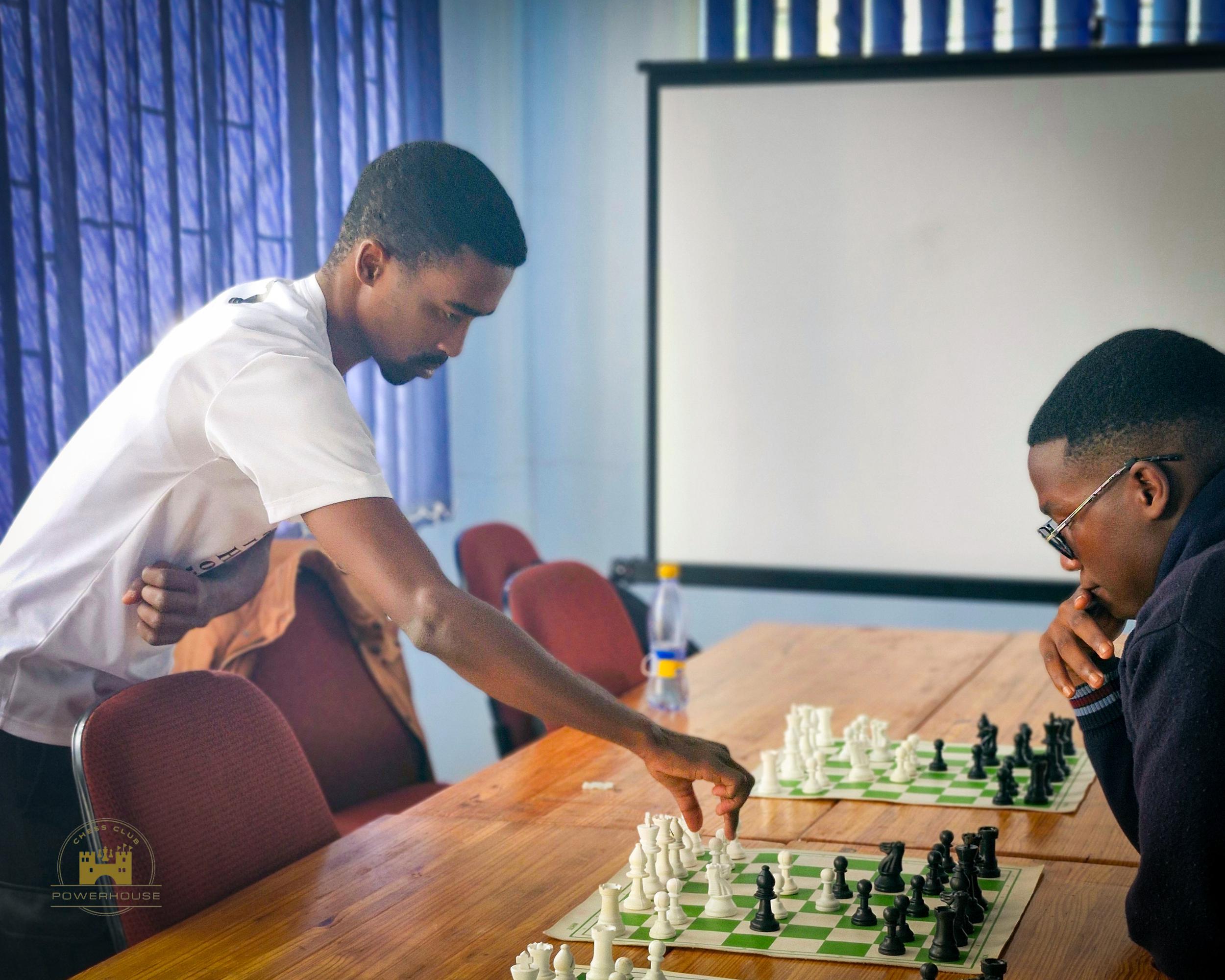
Session 2 of the training was conducted last Friday, 4 July 2025, and it was a tense, engaging, and sharp training for the players. Worth noting is that the session saw 8 chess enthusiasts signing in for the opening principles session, an introductory build-up to the middle game.
This session had new 2 more players joining the moving train, bringing the total number to 10. The new players shared their chess goals, and CM Simphiwe emphasized the need for each player to set personal goals, work to achieve them, and make the training productive.
Developing an Opening Plan.
Now, hitting the ground running, the training started with all players having to take a quick recap on the stages of a chess game, i.e., opening, middle game, and endgame. Critical to this is the fact that each stage has its objectives. The players proceeded to share their favourite and ‘go-to’ openings as white, and some mentions included: the Italian opening, the queen’s gambit, the London opening etc.
During the training, CM Simphiwe emphasized the need to have an opening plan, and this is where a player creates, or rather imagines of an ideal opening position for them to win this stage and subsequently the game. For example, for an opening with a g3 move, fianchettoing the bishop is critical and exchanging for this bishop without a good reason is a good and sweet recipe for a loss. So, in the opening, it is important to know where each piece should be and for what reason.
When asked of the importance of keeping the ‘knights before bishops’ rule CM Simphiwe reminded the players that all opening rules apply, however, the type of opening dictates what needs to be done e.g in the Italian Bc4 is critical otherwise playing Bb5 transposes to a different opening, different plan and associated principles of that opening.
handle your game with caution.
Another important point that CM Simphiwe stressed is the proper positioning of pieces, along with rapid development. For example, knights are powerful pieces at the centre as they attack 8 squares {octo-knight} at the real where they are ‘dim’. Yes, an octo-knight is a player’s dream, but if they are undefended or can be easily attacked, e.g., by a pawn, then they aren’t well-placed pieces.
This brought it to the idea of outposts, good versus bad bishops. On the same note, the CM emphasized, in fact warned, on the early use of the queen, yes, it’s a powerful piece, especially when one plans on the scholar’s mate, but it becomes a waste of time and development when the attack is countered by black.
Well, this summarizes the session; it is not exhaustive. The idea is to give you a glimpse of the discussions, to report back to you, and to encourage you to register. These sessions are interesting and enjoyable; you don’t want to miss them. With 2 sessions left, come and gain skill, you’ll find us discussing the middle game and planning for the endgame.
Ladies, the queens of the game, the powerhouses, you are encouraged to join the training. Lastly, and most importantly, the tour offers players an opportunity to play the PowerHouse Tournament in August at a discounted fee.